

IMF’s Proposed 45% Tax on Agricultural Income: Impacts and Analysis for Pakistan
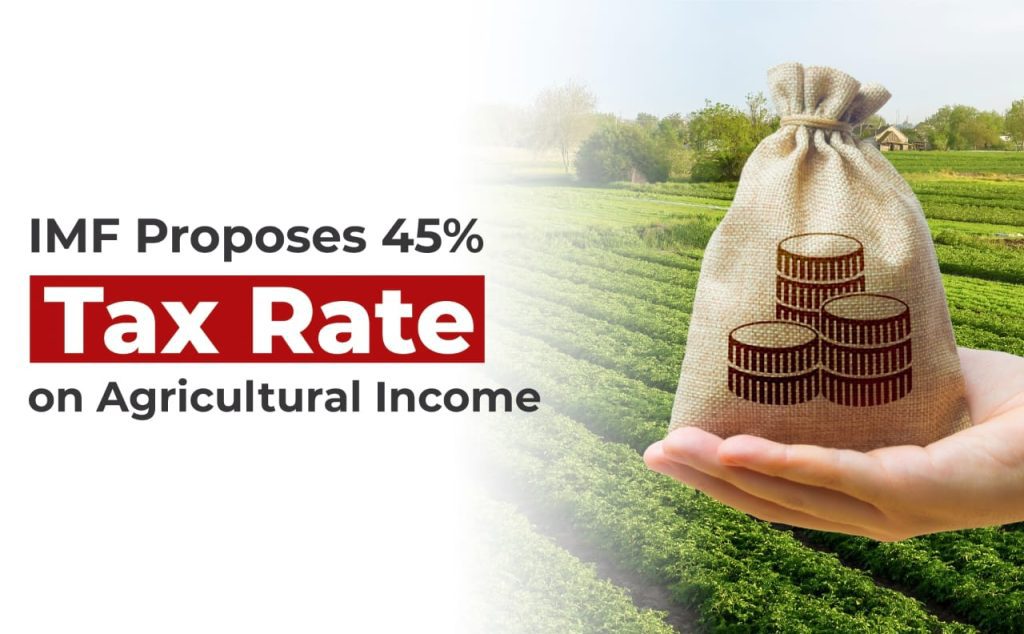
The International Monetary Fund (IMF) has recently proposed a 45% tax rate on agricultural income in Pakistan as part of its economic stabilization measures. This potential policy shift could dramatically reshape Pakistan’s agrarian economy, which currently enjoys significant tax exemptions. At Taxwork, we analyze what this means for farmers, agribusinesses, and Pakistan’s food security.
Current Status of Agricultural Taxation in Pakistan
Existing Tax Structure
Constitutional Protection: Agriculture remains a provincial subject with no federal income tax (Article 141)
Provincial Taxes: Minimal land revenue taxes (avg. Rs. 100-500/acre)
Effective Tax Rate: <1% of GDP from agricultural sector (World Bank data)
Key Exemptions
No income tax on crop sales
No sales tax on unprocessed agricultural goods
Diesel subsidy for tubewells (approx. Rs. 50 billion annually)
IMF’s Proposal Breakdown
Key Features
45% Progressive Tax: Would apply to:
Large landholders (>50 acres)
Corporate farms
High-value export crops (mangoes, rice, citrus)
Thresholds: Expected exemption for subsistence farmers (<12.5 acres)
Implementation Timeline: Potential Phase-in from 2025
IMF’s Justification
Revenue Generation: Could yield Rs. 400-600 billion annually
Sector Equity: Aligns agriculture with other taxed industries
Loan Conditionality: Part of $6 billion Extended Fund Facility requirements
Potential Impacts
Negative Consequences
| Sector | Impact |
|---|---|
| Small Farmers | Increased input costs may force land sales |
| Food Prices | 15-20% inflation expected on wheat, rice, vegetables |
| Exports | Reduced competitiveness vs. India (no agri-tax) |
| Rural Employment | 2-3 million may shift to urban sectors |
Positive Outcomes
✔ Formalization: 70% undocumented farms may enter tax net
✔ Tech Adoption: Incentive for productivity-enhancing investments
✔ Revenue Utilization: Potential for rural infrastructure development
Comparative Analysis: How Other Countries Tax Agriculture
| Country | Tax Rate | Key Features |
|---|---|---|
| India | 0-30% | State-dependent, exemptions for smallholders |
| USA | 10-37% | Deductions for equipment/inputs |
| Brazil | 4-27.5% | Lower rates for family farms |
| Proposed Pakistan | 45% | Would be highest among peers |
Stakeholder Reactions
Opposition Groups
Punjab Growers Association: Threatens nationwide tractor protests
Senate Standing Committee: Calls it “economic suicide” during food inflation
Supporters
Urban Economists: Cite Rs. 7 trillion untaxed agrarian economy
IMF: Argues current system favors “feudal elites”
Taxwork’s Expert Recommendations
For Farmers
Land Fragmentation: Consider legal division of holdings below threshold
Record Keeping: Start maintaining verifiable income/expense records
Crop Switching: Shift to lower-tax staple crops if implemented
For Policymakers
Gradual Implementation: 5-year phase-in period
Input Subsidies: Offset taxes with fertilizer/diesel support
Tech Incentives: Tax credits for precision agriculture adoption
Case Study: Argentina’s Agricultural Tax Experience
2008 Export Tax Hike (35% to 45%)
Short-Term: 18% production drop
Long-Term: 40% smuggling increase
Lesson: Sudden hikes trigger market distortions
FAQs
Q: Will this affect kitchen gardening/home farms?
A: Unlikely – proposals target commercial operations (>12.5 acres).
Q: How can farmers prepare financially?
A: Our tax planning services can help restructure operations.
Q: What’s the chance of actual implementation?
A: Currently 30% – requires constitutional amendment (2/3 majority).
Conclusion
While the IMF’s proposed 45% agricultural tax aims to broaden Pakistan’s tax base, its implementation risks disrupting food security and rural livelihoods. At Taxwork, we recommend:
Farmers: Begin digital record-keeping
Policymakers: Consider tiered rates (e.g., 15% for 12-25 acres)
Businesses: Model scenarios with our tax advisory services
Need Customized Advice? Contact our agrarian tax specialists today.
📞 +92 344-4643981 | 🌐 https://taxwork.pk/